Want to be in the loop?
subscribe to
our notification
Business News
GOV'T URGED TO INSTALL TECHNICAL BARRIERS TO FILTER FDI PROJECTS
First, oil refineries. The projects licensed so far in the field have total capacity of up to 50-60 million tons. It is estimated that petrochemistry and oil refineries can only bring profit of 10 percent. An oil refinery with the capacity of 6-10 million tons needs an area of thousands of hectares, but employs only 8,000-10,000 workers.
Samsung's project has investment capital of $3 billion, but only needs 100 hectares of land and employs 43,500 workers with average pay of VND11 million a month.
Second, cement production. The licensed cement projects have total capacity of 65-70 million a year, which is much higher than domestic demand.
However, the bigger problem is that in order to churn out 65-70 million tons of cement, plants would need 100 million tons of limestone.
Consultants and experts have recommended that Vietnam take measures to prevent foreign-invested projects from using outdated technologies, causing pollution and consuming national resources.
With the current consumption level, Vietnam would consume 1 billion tons of limestone for every 10 years. In addition, cement production causes pollution.
“If counting the costs on the environment, cement production won’t bring profits,” Mai said.
Third, steel projects, which are huge electricity consumers. Vietnam’s current electricity output is still not high enough to satisfy demand. The Electricity of Vietnam has to make heavy investments every year to increase output by 12-13 percent per annum because the investment rate in the field is high.
And fourth, textile and dyeing projects. According to the Foreign Investment Agency (FIA), the projects in the field by 2020 have had total investment capital of $2.5 billion.
Technical barriers
According to Dang Xuan Quang, deputy head of FIA, a solution which Vietnam can apply is setting up technical barriers, which allows the most suitable projects while it does not break international commitments.
Quang said the criteria Vietnam to set up technical barriers include national sovereignty and security and environmental protection.
If Vietnam wants high-technology projects, it needs to set up high environmental requirements. For example, it can set up requirements on the maximum amount of materials and waste for the production of one ton of steel.
The third criterion could be development planning. The land in the areas which can be used more effectively for clean projects will not be opened for polluting projects.
Source: VIR
Related News

MEMBER CORNER / PROMOTIONS
AN ELECTRIFYING NIGHT WITH THE "QUEEN OF DANCE" THU MINH AT THE GRAND HO TRAM!
The stage at The Grand Ballroom is set to catch fire as Vietnam’s undisputed "Queen of Dance," Thu Minh, takes the spotlight. Renowned for her powerhouse vocals, magnetic stage presence, and sultry, high-energy performances, Thu Minh promises an evening of pure musical euphoria. The energy escalates with an exclusive appearance by special guest and The Voice champion, Vu Thao My.
HR / LABOUR/ EMPLOYMENT
HIGH-QUALITY HUMAN RESOURCES NEEDED TO ATTRACT NEW TECH INVESTMENT CAPITAL
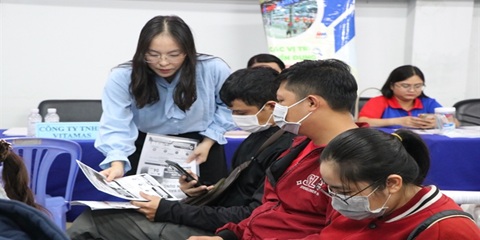
Besides infrastructure, Việt Nam must also rapidly develop a highly skilled workforce to attract investment in AI, semiconductors and advanced manufacturing, experts have said. Don Lam, CEO and co-founder of investment management company VinaCapital, said that global technology investors were increasingly looking at the readiness of the entire ecosystem, with high-quality human resources a decisive factor.
HR / LABOUR/ EMPLOYMENT
HIRING OUTLOOK STRENGTHENS IN Q4 AS SKILLS SHORTAGES PERSIST
Hiring intentions among employers in Việt Nam strengthened in the fourth quarter, with 52 per cent of surveyed companies planning to increase headcount between October and December, according to a ManpowerGroup survey released this week. Việt Nam's hiring outlook was stronger than the Asia Pacific and Middle East (APME) regional average of 33 per cent and the global average of 29 per cent, ranking third in the region and 11th globally among 42 markets surveyed.
BANKING / FINANCE / INSURANCE / TAX
LARGE BANKS FORECAST TO GAIN HIGHER PROFITABILITY IN H2 2026
The return on average assets (ROAA) of the banking sector will likely remain stable at around 1.5 per cent in the second half of 2026, but profitability divergence among banks will increase, with large banks outperforming peers on stronger margins and diversified earnings, analysts forecast. In a recent report on the banking sector, analysts from the Vietnam Investors Service Rating said the sector’s ROAA rose by 10 basis points quarter-on-quarter to 1.51 per cent in the first half of this year, driven by net interest margin (NIM) improvements at some State-owned banks and large private banks.
GARMENT / TEXTILE
VIỆT NAM'S FOOTWEAR, BAG EXPORTS TO US TOP $8 BILLION IN EIGHT MONTHS
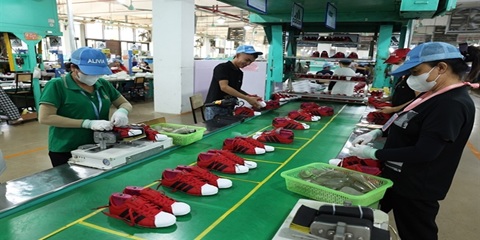
Việt Nam's exports of footwear and handbags to the US exceeded US$8 billion in the first eight months of 2026, as the US and EU remained the country's biggest markets despite sluggish growth in footwear shipments. Exports from Việt Nam's leather and footwear sector reached more than $2.45 billion in August, down 9 per cent from July but up 3 per cent from a year earlier, according to preliminary statistics.
VIETNAM ECONOMY INVESTMENT
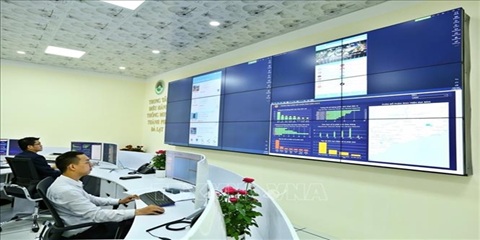
LÂM ĐỒNG TARGETS DIGITAL ECONOMY TO ACCOUNT FOR 30 PER CENT OF GRDP BY 2030
Lâm Đồng Province aims to raise the digital economy’s contribution to around 30 per cent of its gross regional domestic product (GRDP) by 2030, as part of a five-year plan to develop digital economy and society issued recently. Under Plan No. 15358/KH-UBND, the province targets more than 60 per cent of small- and medium-sized enterprises (SMEs) to adopt digital technologies by 2030 while increasing the value of cashless payments to 30 times its GRDP.
Events Sponsors






















